.svg)

Your IT service provider steps in when something breaks. They send a technician within 48 hours. They update your Windows workstations once a quarter. And they bill you for each service call.
By 2026, this model will be obsolete. Cyberthreats don’t take a break on Friday nights. Your employees work from home, on the go, and across three different devices. Your IT infrastructure is hybrid (cloud + on-premises). And the NIS2 Directive imposes security requirements that your current help desk isn’t equipped to handle.
This article provides an overview of what IT outsourcing actually entails in 2026, what has changed, the five criteria for choosing the right partner, and why the distinction between traditional IT outsourcing and managed services is no longer a minor detail—it’s a strategic choice.
IT Outsourcing for Small and Medium-Sized Businesses: What It Actually Covers
The core components of a managed services offering:
- Technical support: hotline, remote support, on-site service. Your employees call when they get stuck.
- IT infrastructure maintenance: Windows updates, security patches, hardware replacement, license management.
- Infrastructure monitoring: monitoring of servers, the network, and critical equipment.
- Backup: Automated copying of your data, either locally and/or to the cloud. Restore tests.
- Access management: Active Directory, account creation and deletion, access rights.
What many managed services offerings do NOT cover (and that’s where the problem lies):
- Advanced cybersecurity: no SOC, no EDR, no real-time threat detection. Just basic antivirus software.
- 24/7 monitoring: Many service providers only monitor during business hours. At night and on weekends, there is no one monitoring the system.
- IT Strategy: No roadmap, no steering committee, no guidance on the evolution of the IT system. We just fix things as they come up; we don’t think about the future.
- Regulatory compliance: NIS2, GDPR, ISO 27001—your service provider doesn’t handle these issues. That’s your problem.
What Has Changed for Small and Medium-Sized Businesses in 2026
Cyber threats primarily target small and medium-sized businesses
In 2025, 37% of ransomware victims handled byANSSI were small and medium-sized enterprises (SMEs), micro-enterprises, or mid-sized companies. This is by far the most affected category of organizations. Attackers target SMEs because they are less protected than large enterprises. Antivirus software and a firewall are no longer sufficient against attacks such as “living-off-the-land” attacks, targeted phishing, or Microsoft 365 account compromises.
NIS2 imposes specific requirements
The European NIS2 Directive (2022/2555) extends cybersecurity obligations to companies in critical and important sectors: privileged access management, traceability, incident response plans, early warning within 24 hours, and full notification within 72 hours. France has not yet transposed the directive, as the draft law on the resilience of critical infrastructure is still under review, but the timeline is tightening: the European Commission referred the matter to the Court of Justice of the European Union in July 2026 due to this delay. The affected companies would therefore be wise to prepare now, and your IT service provider should be able to assist you in this process. If this is not the case, you bear the risk alone.
To secure your administrator access, a IT bastion is often the first component to deploy.
IT has become hybrid and distributed
Cloud (Microsoft 365, Azure), on-premises (local servers), remote work, multi-site operations—the scope of what needs to be managed has exploded. A service provider that can only manage physical servers in a server room no longer meets the need.
The IT talent shortage is getting worse
Hiring an IT manager means paying a high salary, going through a hiring process that takes months, training them on your IT system, and managing their absences (vacation, sick leave, resignation). And you still have to find the right person. Outsourced IT services give you access to a full team (support, security, cloud, strategy) at a predictable cost, without having to rely on a single person.
What a true managed services offering includes
Here is a concrete breakdown of what a comprehensive MSP offering should include (example: IT Systems offering):
| Field | What IT Systems Covers |
|---|---|
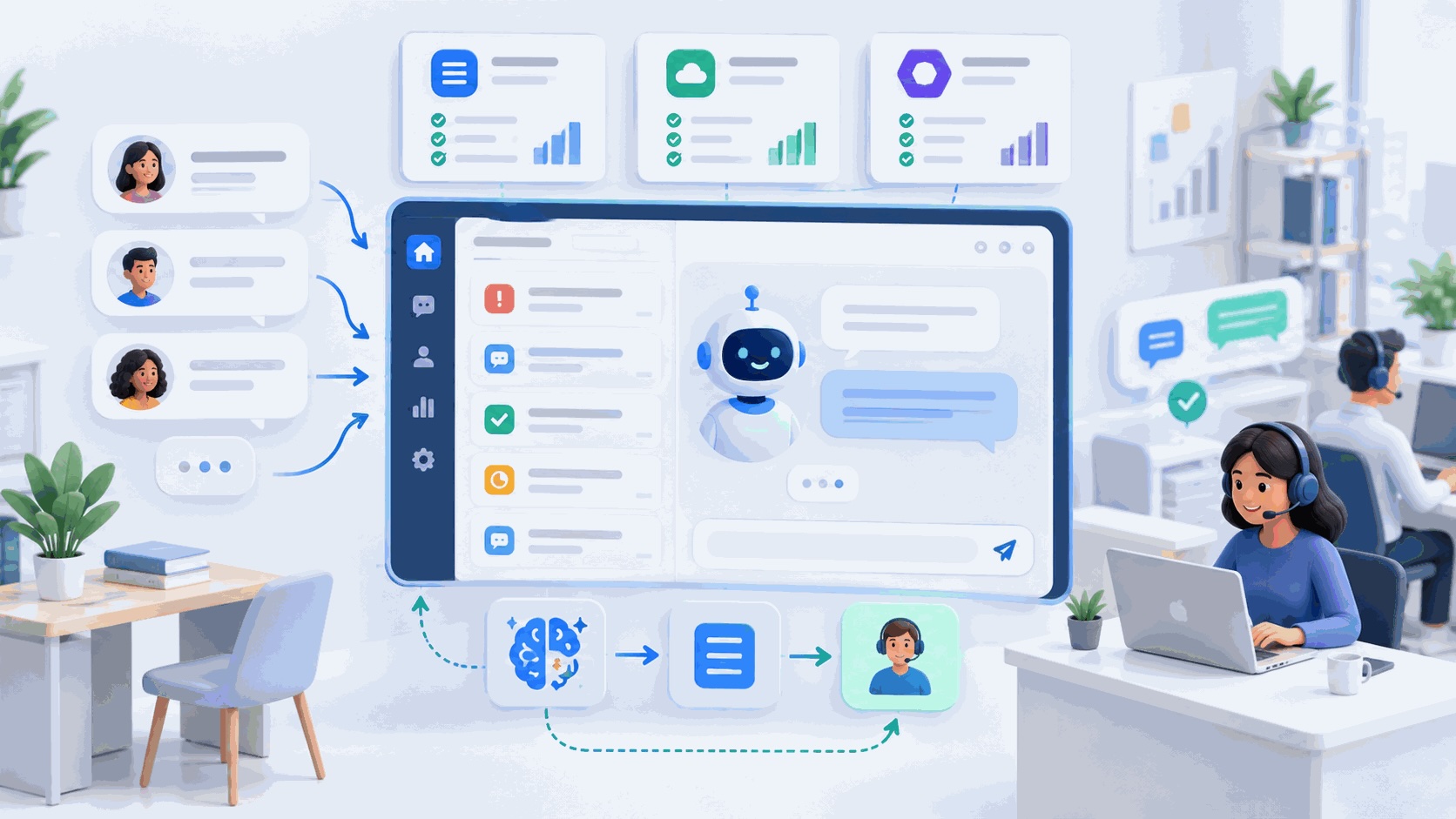
| User Support | Multi-channel help desk (phone, portal, email). Level 1/2/3 support. Dedicated technicians trained on your business tools. 60% of Level 1 tickets resolved without human intervention (measured from June to August 2026, 55 clients under contract). |
| Supervision | Continuous monitoring of your servers, networks, and critical equipment. Proactive detection of anomalies. 24/7/365 coverage at no additional cost. |
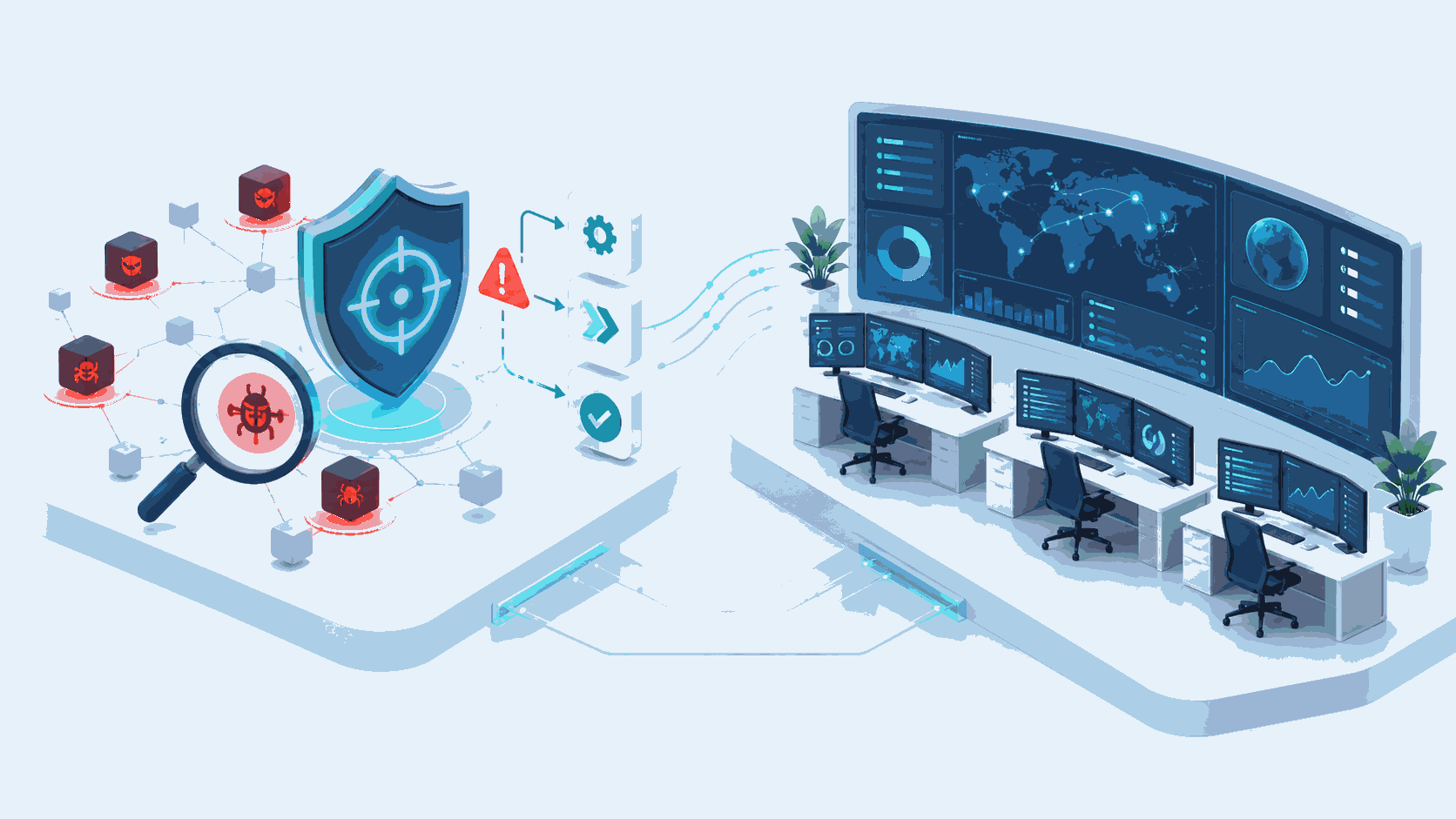
| Cybersecurity | 24/7 SOC management. EDR/XDR (Microsoft Defender for Endpoint). MFA, Conditional Access, Zero Trust approach. Cyber Pilot 360 bundle with outsourced CISO. |
| IT Management | Preventive and corrective maintenance, updates, server and network administration, access management (Active Directory, Entra ID, Microsoft 365). Backup, disaster recovery planning. |
| Fleet Management | Mastering, configuration (Intune), standardized deployment. Lifecycle management, after-sales service, logistics, certified data destruction (WEEE). |
| One-stop shop | Management of your third-party service providers: telecom operators, software vendors, and hosting providers. A single point of contact for all your IT needs. |
| Compliance | GDPR and NIS2 are included in the scope. The ISO 27001 certification process is underway. Microsoft Solutions Partner Security, with 33 active Microsoft certifications as of September 4, 2026. |
| Governance | Dedicated Account Manager (AM). Monthly reporting. Quarterly steering committee meetings. Contractually agreed KPIs (SLA). |
| Support | IT roadmap, strategic consulting, anticipating trends (cloud, security, IT modernization). Cloud Cost Optimization. |
| Commitment | Contracts with no minimum term, for 5 or more users. |
The term “IT outsourcing” is what everyone uses. But what SMBs are really looking for in 2026 is a managed services model: an IT partner that takes charge of the entire IT system, anticipates problems, secures the infrastructure, and supports their strategy. Not just a help desk.
How much does IT outsourcing cost for an SME?
Pricing varies significantly depending on the scope of service: from basic support with maintenance to a comprehensive managed services offering that includes monitoring, cybersecurity, and governance. What matters most is not the price listed but what is actually included—and, above all, what is not. Before comparing quotes, make sure the scope is identical: an entry-level package that covers neither a SOC, nor proactive monitoring, nor strategic guidance is not comparable to a comprehensive MSP offering.
Another comparison to keep in mind: the cost of an in-house IT manager (salary, benefits, training, absences) versus that of an outsourced team available around the clock. For most small and medium-sized businesses with 20 to 100 workstations, outsourcing offers a better cost-to-coverage ratio—provided you choose the right partner.
How IT Systèmes Implements This Approach
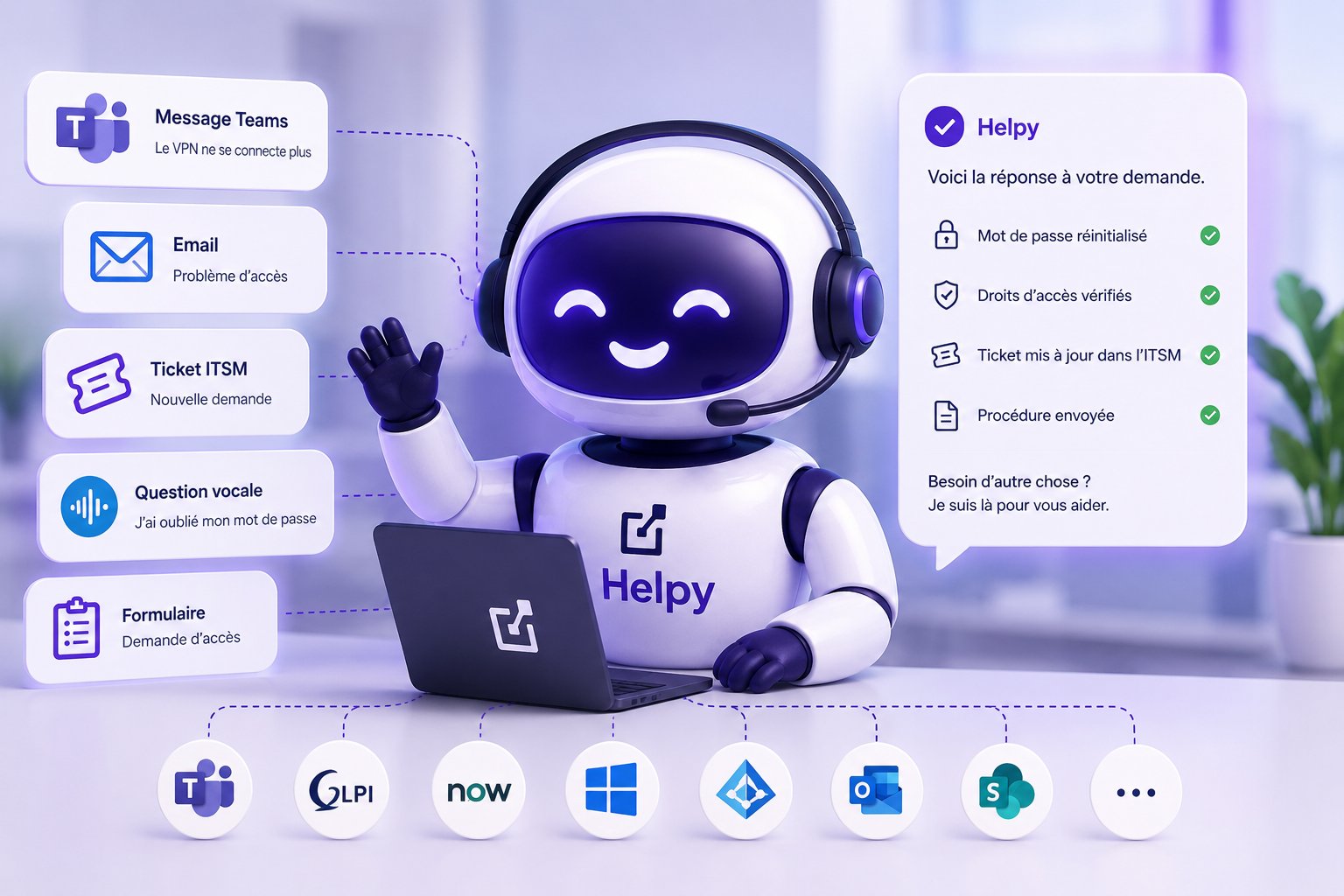
At IT Systèmes, this approach relies on Helpy, the AI agent integrated into the Hypergérance offering. From June to August 2026, Helpy resolved 60% of Level 1 tickets without human intervention, serving a base of 55 clients under Hypergérance contracts and processing 1,889 tickets, with an average resolution time of 3 minutes (IT Systèmes internal barometer; next edition: September–December 2026).
This level of automation is what enables IT Systèmes to offer a basic managed services package starting at €12 (excluding tax) per user per month, with no minimum contract term, for groups of 5 or more users (see our pricing page for details).
Get a free assessment of your managed IT services
The 5 Most Common Mistakes SMEs Make in IT Outsourcing
1. Choosing the cheapest provider without considering the scope of service. A low price isn’t necessarily suspicious in itself, but vague service coverage is: be wary of a package that promises unlimited support, a 24/7 SOC, and strategic guidance all for the price of support alone. Ask what’s billed separately. When a ransomware attack strikes, the price difference will be negligible compared to the cost of the incident.
2. Sign a 36-month contract with no trial period. You won’t know if the service is good until after 2–3 months of operation. Negotiate a pilot phase and insist on measurable KPIs from the start (call drop rate, first-call resolution, satisfaction).
3. Failing to verify the scope of monitoring. “24/7 monitoring” can mean “we receive alerts, but no one reads them at night.” Ask: Who handles alerts at 3 a.m.? A SOC analyst or an automated script?
4. Treating cybersecurity as a separate project. If your IT service provider doesn’t handle your security, you end up with two service providers who don’t communicate with each other and a gap in coverage between them.
5. Don’t skip the steering committee. Without regular reporting, you have no visibility into the status of your IT infrastructure. A good MSP provides you with KPIs (availability, resolution time, security alerts) and challenges you on your IT strategy.
Frequently Asked Questions About IT Outsourcing for Small and Medium-Sized Businesses
Full or partial IT outsourcing: which should you choose?
Full outsourcing is ideal for small and medium-sized businesses without an in-house IT team. The service provider acts as your outsourced IT director. Partial outsourcing (co-managed) is ideal for small and medium-sized businesses that already have an IT manager and want to strengthen their capabilities in security, cloud computing, or system monitoring. Both models work; it’s a matter of business maturity and internal resources.
How does the transition from my current provider work?
A good MSP ensures a structured 8-week transition: scoping and audit (Weeks 1–2), training and skills transfer from the outgoing service provider (Weeks 3–4), supervised shadowing (Weeks 5–6), pilot phase followed by production (Weeks 7–8). The outgoing service provider has a contractual obligation to provide access and technical documentation (reversibility clause). The transfer of the ITSM data itself (tickets, knowledge base) is automated using an orchestration platform: we use FlexFlow, developed by the IT Systèmes group.
Is my business too small for an MSP?
No. Our contracts start at five users, with no minimum term: modular packages—either bundled or à la carte—for small and medium-sized businesses, and customized support for large enterprises. Some MSPs even incorporate AI assistants (such as Helpy) that answer common questions 24/7 and take the pressure off Level 1 support.
Does outsourcing mean I lose control of my IT?
It’s actually the opposite. With an MSP, you have greater visibility than before: detailed monthly reports, quarterly steering committee meetings, and agreed-upon KPIs (answer rate, first-call resolution, satisfaction). You retain strategic control while delegating day-to-day operations to experts. Your Account Operations Manager (AOM) is your single point of contact. And with a contract that has no minimum term, you can leave at any time.
Which sectors are affected?
All of them. But certain industries have specific needs: law firms (attorney-client privilege, CNB compliance), accounting firms (software migration, client portal), manufacturing (production continuity, OT), healthcare (HDS, health data), and local governments (RGAA, digitization). A good MSP adapts to the specific requirements of your industry.
How does IT Systèmes reduce the processing time for managed services tickets?
IT Systèmes uses Helpy, its AI agent, which resolved 60% of tickets without human intervention between June and August 2026, with an average resolution time of 3 minutes (internal metrics, 55 clients under full-service management contracts).
Is your current IT outsourcing service up to the task?
→ Learn more about our managed IT services
→ Explore our full range of managed services




.svg)