.svg)

In summary, AIOps (Artificial Intelligence for IT Operations) refers to the application of artificial intelligence and machine learning to IT operations. An AIOps platform continuously collects logs, metrics, traces, and events from an information system, then analyzes them to detect anomalies, group alerts related to the same cause, anticipate incidents, and automate some of the responses. The goal: to move from reactive monitoring—which identifies an outage after it occurs—to predictive operations that anticipate it.
The term was coined by Gartner in 2016. Originally, it stood for “Algorithmic IT Operations”; a year later, the firm redefined it as “Artificial Intelligence for IT Operations,” the term still in use today.
This page covers the basics: what AIOps entails, how it works in practice, what it means for managed IT services, and what its limitations are. If you manage an IT system for an SME or mid-sized company and keep hearing this term come up in discussions without really knowing what it means, you’ve come to the right place.
AIOps in a nutshell
AIOps involves using AI models to perform the analysis that the sheer volume of operational data makes impossible to do manually.
A modern IT environment generates a massive volume of data: application logs, system metrics, network traces, security alerts, and cloud events. In a hybrid infrastructure with a few dozen servers, Microsoft 365 workstations, and Azure services, this easily amounts to millions of lines per day. No human team can read all of this in real time. AIOps takes this raw telemetry and extracts what matters: an emerging anomaly, a correlation between two seemingly unrelated incidents, or a threshold about to be exceeded.
How It Works, Step by Step
The way it works is always the same, regardless of which publisher is behind the platform.
1. Data collection. The platform continuously ingests data from every layer of the system: logs, metrics, traces, events, and alerts. It can aggregate heterogeneous formats from different sources (servers, network, applications, cloud).
2. Normalization and correlation. The data is standardized and then cross-referenced. This is the key step. Instead of generating 500 isolated alerts on a morning when a system goes down, the platform identifies that they all stem from a single cause—for example, an unavailable database. This is referred to as noise reduction: fewer alerts, but alerts that are meaningful.
3. Anomaly detection. Based on a learned baseline of normal system behavior, the models identify deviations. A response time that slowly drifts, an unusual volume of connections, or abnormal latency on a core router.
4. Root Cause Analysis (RCA). The platform traces the chain of events to identify the likely source of an incident: what, when, where. Some solutions now incorporate language models that read logs and directly generate a summary of the incident.
5. Automated response. For known and validated cases, the platform can trigger a corrective action without human intervention: run a script, isolate a workstation, or roll back a configuration. Humans retain control over sensitive decisions; the machine handles repetitive tasks.
AIOps, Observability, DevOps, MLOps: Don't Confuse Them
These terms are often used together and eventually become confused. They do not refer to the same thing.
An important distinction: observability provides the data, while AIOps uses that data to make decisions. One does not replace the other; they complement each other.
How AIOps Is Changing Managed IT Services
This is where the concept moves beyond theory. Historically, managed services have been based on two pillars: server operations and ticket handling. An incident occurs, an alert is triggered, and a technician handles it. This is a reactive model.
AIOps shifts the focus toward proactive management. In practical terms, for a managed IT environment, this means:
Predictive monitoring. Rather than waiting for a threshold to be exceeded, the platform identifies early warning signs that indicate an impending failure. We take action before the incident occurs, not after.
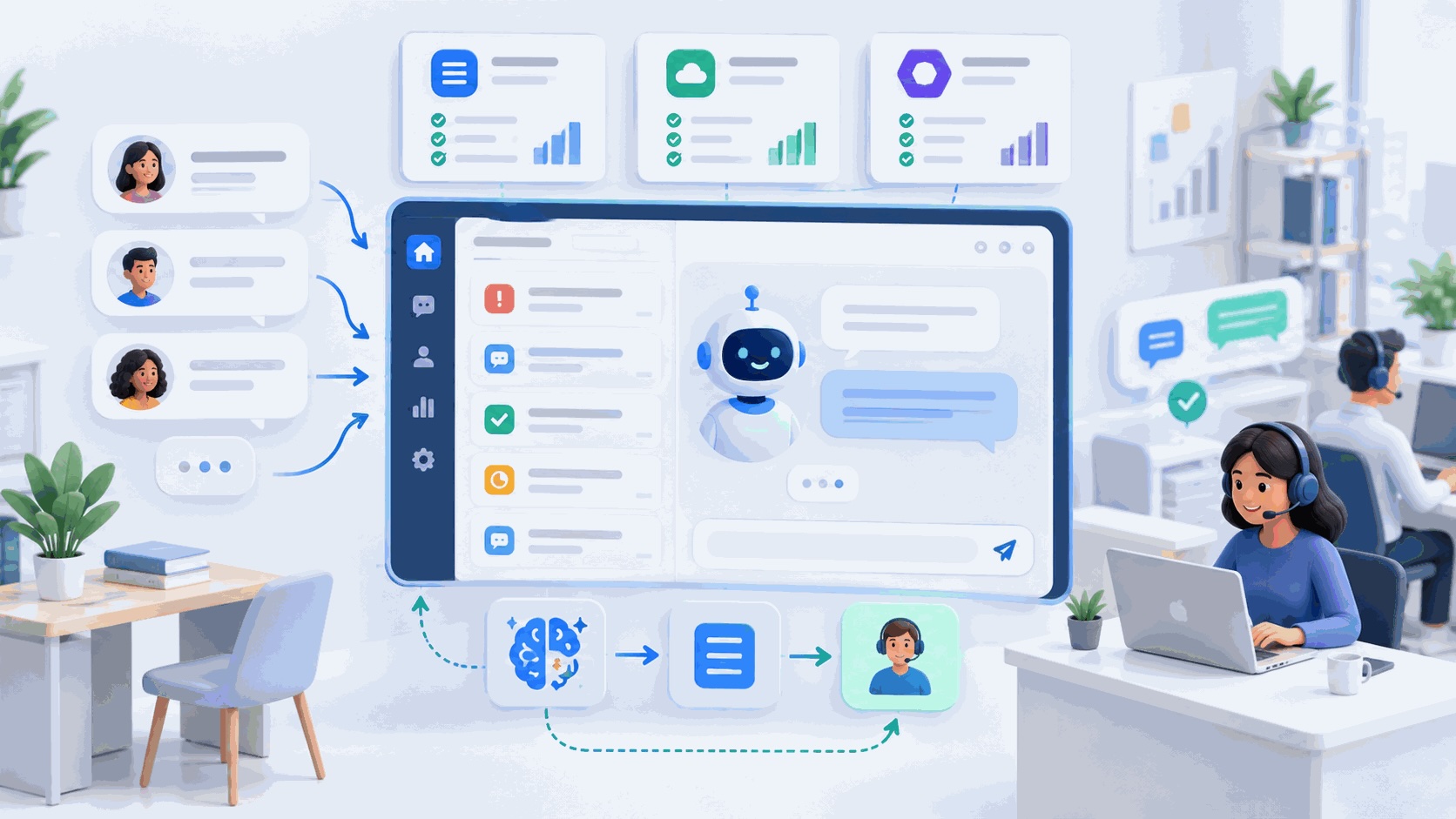
Automated ticket sorting. Tools categorize, prioritize, and route requests without manual intervention. The most common Level 1 incidents can be resolved by autonomous agents, freeing up technicians to focus on higher-value issues.
Faster response times. In mature organizations, alert correlation and automation significantly reduce the mean time to resolution (MTTR). Engineers spend fewer nights putting out fires.
There is an interesting side effect. The IT sector is facing a labor shortage, and AIOps helps address this shortage to some extent: by automating repetitive tasks, it makes it possible to maintain a fleet of systems without proportionally increasing the workforce. It doesn’t replace teams; it lightens their workload.
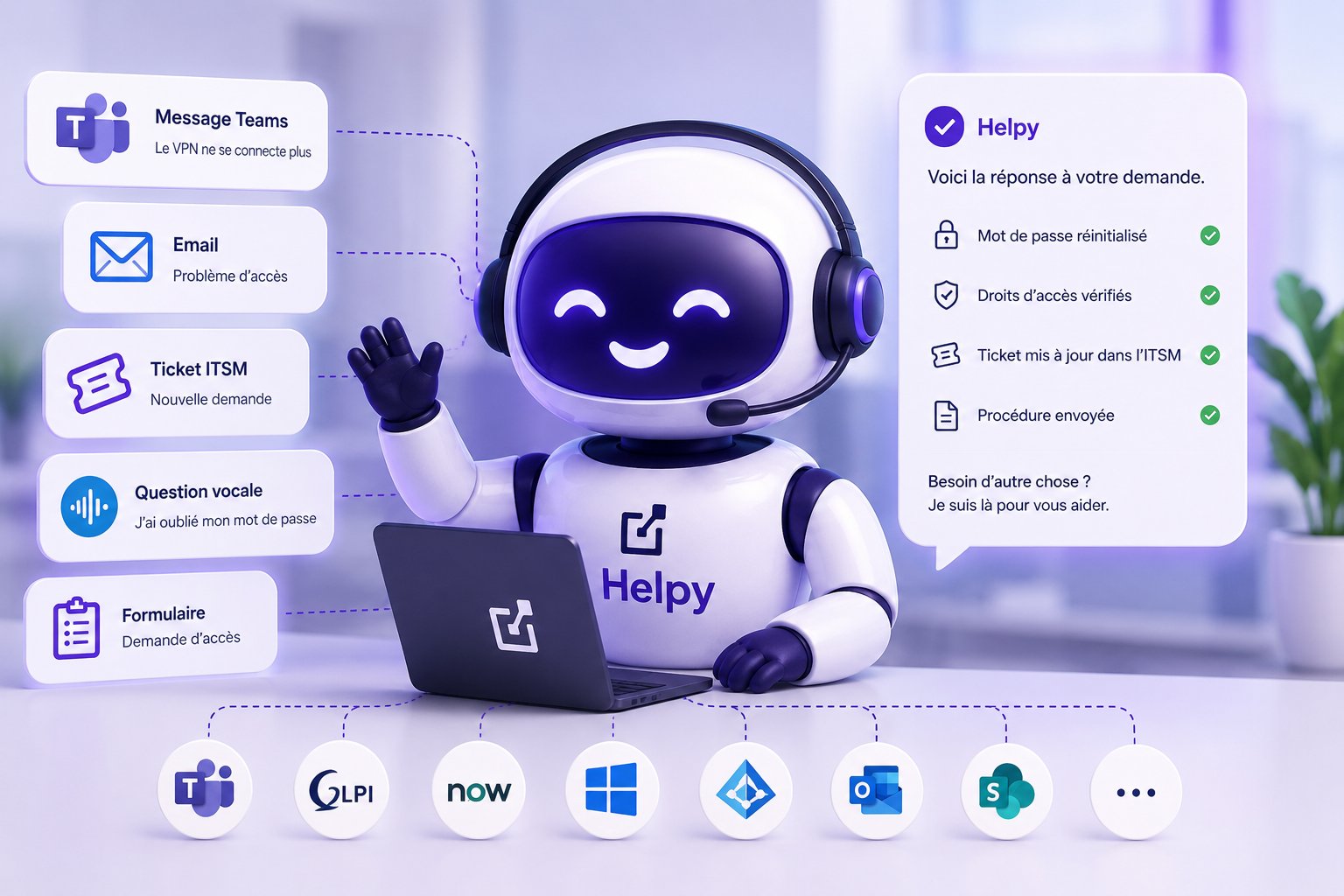
We’re not just talking theory. At IT Systèmes, we’ve been providing managed IT services since 2010, and we apply this approach to our own support operations. We built our AI-powered help desk solution, Helpy, and we use it for our internal managed IT services before offering it to our clients. The tangible result: Helpy resolves 60% of Level 1 tickets on its own, reducing response times from several hours to just a few minutes. Technicians handle only the cases that truly require their expertise, while the AI takes care of the routine tasks.
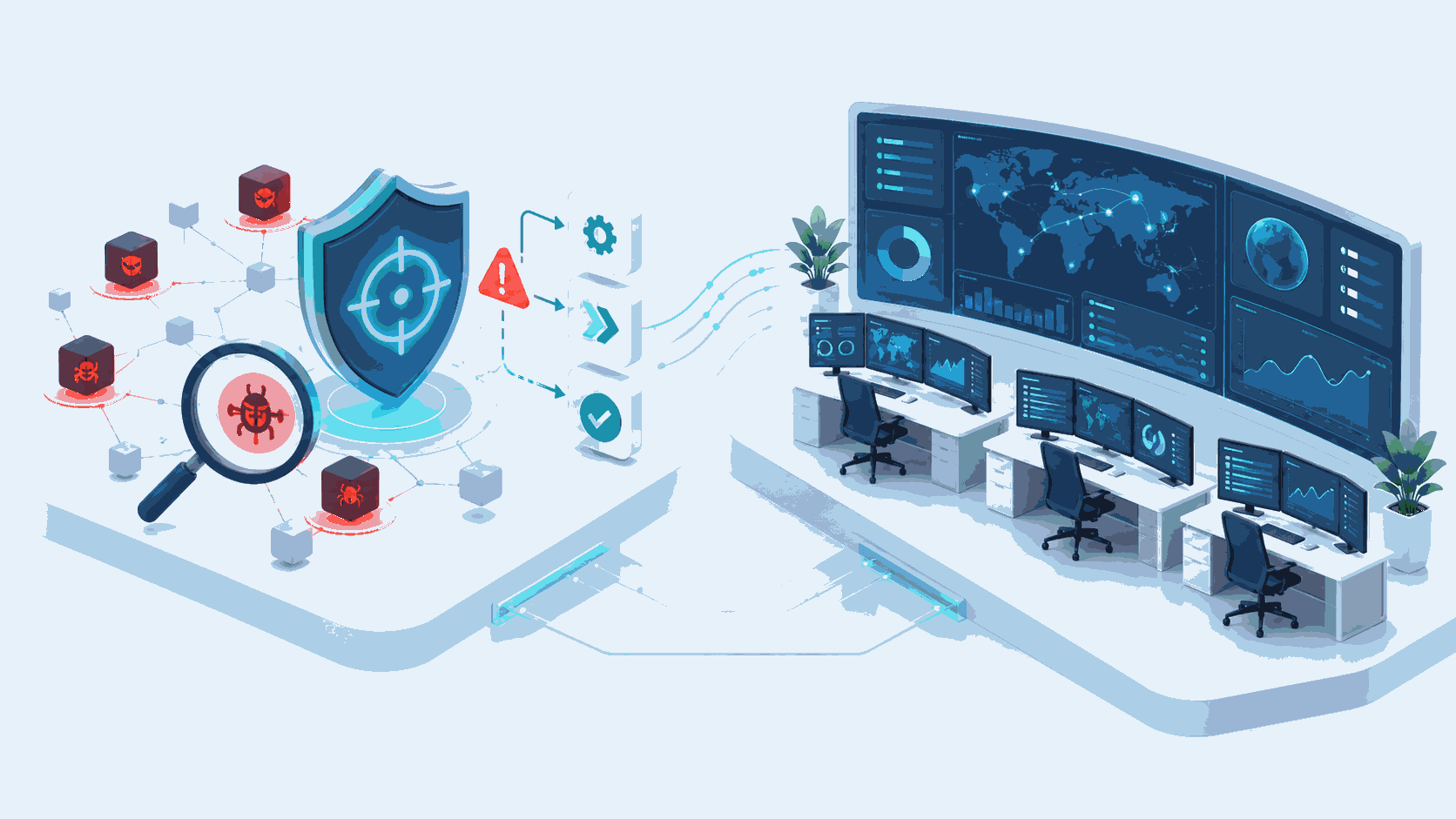
This is AIOps in the day-to-day operations of a managed IT service provider: not an agent who refers you to an FAQ, but a tool that takes action. The same logic applies to security with our managed SOC: AI-powered monitoring detects and correlates incidents, while our analysts investigate and make decisions. The machine filters; humans decide.
Limitations: AIOps Is Not Magic
Let's just say it straight out, because the marketing surrounding this topic tends to overstate things.
An AIOps approach requires a certain level of maturity. You must already have monitoring tools in place, be able to trigger actions via API, and, above all, have a documented history of incidents to train the models. Without clean input data, AI produces “smart noise” rather than reliable decisions.
Deployment is done gradually, never all at once. We start with a specific use case (such as correlating alerts within a specific scope), measure the results, adjust the thresholds, and then expand. Trying to automate everything from day one is the surest way to lose confidence in the tool.
Finally, automated responses are limited to known and validated cases. An AIOps platform will not improvise when faced with an unprecedented incident. Human judgment remains central, especially when it comes to decisions affecting security or service continuity.
Who is AIOps for?
The concept originated in large cloud-native infrastructures, featuring containers, microservices, and multicloud. But it is now making its way to small and medium-sized businesses, driven by software vendors and IT service providers who are integrating it into their offerings.
If your system is based on a Microsoft environment (Microsoft 365, Azure, Defender) with both cloud-based and on-premises components, AIOps makes sense once the volume of alerts exceeds what a team can comfortably handle. The threshold isn’t a matter of absolute size but of workload: once your technicians are spending more time sorting through alerts than resolving them, there’s room for improvement.
A concrete example: in our own support system, Level 1 tickets (resets, access requests, recurring inquiries) accounted for the bulk of the volume before automation. This is exactly the kind of repetitive, time-consuming workload that an AI approach applied to operations tackles first. If this sounds familiar, you’re probably ready to discuss it.
In a nutshell
AIOps applies AI to IT operations to shift from reactive monitoring to proactive operations. For managed services providers, this means less noise, faster incident resolution, and teams refocused on what matters. It’s neither a magic wand nor a replacement for humans: it’s a tool that requires clean data, a phased rollout, and ongoing human oversight.
If you want to see AIOps in action from a support perspective, read about how we automated 60% of our Level 1 tickets independently using Helpy.
Would you like to entrust your IT system to a managed services provider that combines AI-powered monitoring with human expertise? Learn more about our managed services offerings or schedule a consultation with our experts.
Frequently asked questions
What does AIOps stand for? AIOps is an acronym for “Artificial Intelligence for IT Operations,” which refers to the application of artificial intelligence to IT operations. The term was introduced by Gartner in 2016.
What is the difference between AIOps and observability? Observability is the ability to understand the state of a system based on its signals (logs, metrics, traces). AIOps applies AI to these signals to analyze them, correlate alerts, predict incidents, and automate responses. Observability provides the data; AIOps uses it to make decisions.
Does AIOps replace IT teams? No. AIOps automates repetitive tasks and alert triage, freeing up teams to focus on higher-value work. Critical decisions—particularly those related to security and service continuity—remain under human supervision.
What are the prerequisites for deploying AIOps? You must have monitoring or observability tools in place, be able to trigger actions via API, and have a documented history of incidents to train the models. Deployment occurs in successive use cases, not all at once.
Is AIOps suitable for small and medium-sized businesses? Yes, as long as the volume of alerts exceeds what a team can handle manually. The determining factor is not the size of the company but the operational workload. Hybrid Microsoft environments (Microsoft 365, Azure, Defender) are well-suited for this.




.svg)