We use cookies on this website.

By clicking "Accept," you agree to the storage of cookies on your device to improve your browsing experience, analyze site usage, and contribute to our marketing efforts. See our privacy policy for more information.

Advice

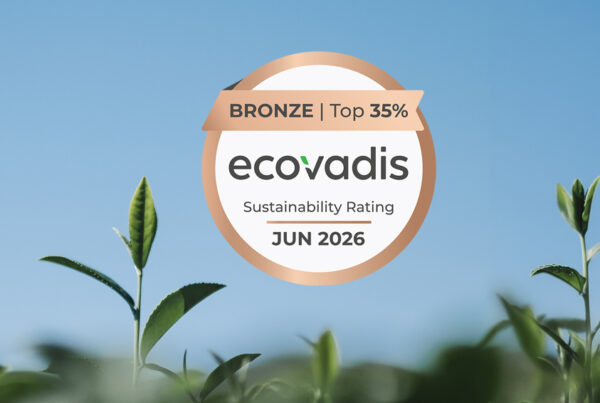
IT Systèmes Earns the EcoVadis Bronze Medal | CSR Commitment

IT Systèmes has been awarded the EcoVadis Bronze Medal (top 35% globally). Our CSR commitments: environmental, social, ethical, and responsible procurement.

IT Systèmes Earns the EcoVadis Bronze Medal | CSR Commitment

IT Systèmes has just been awarded the EcoVadis Bronze Medal, placing it among the top 35% of companies evaluated worldwide. Beyond internal recognition, this achievement has tangible benefits for you as a customer.

Key Takeaways

  • IT Systèmes' EcoVadis certification can be used directly in your own CSR reports and requests for proposals.
  • It certifies verified practices in four areas: the environment, working conditions, ethics, and responsible sourcing.
  • Choosing an IT service provider with CSR certification reduces your exposure to supplier risks (staff turnover, opaque subcontracting, GDPR non-compliance).
  • Certification is renewed annually: commitments are maintained and tracked over time.

Your IT service provider becomes part of your CSR value chain

Many small and medium-sized enterprises (SMEs) and mid-sized companies are now being asked by their own customers or clients to demonstrate the CSR performance of their supply chains. This is no longer limited to large corporations: the CSRD directive, public procurement specifications, and the purchasing policies of large companies are gradually trickling down to their suppliers—and thus to you.

Your IT service provider is part of this chain. An EcoVadis certificate for your IT provider is a standardized, recognized document that you can use as-is in your own responses to requests for proposals or in your annual CSR report.

Would you like to learn more about our CSR approach?

Learn about IT Systèmes' commitments to the environment, social practices, ethics, and responsible procurement.

See our CSR page →

What IT Systèmes' EcoVadis certification actually covers

EcoVadis evaluates suppliers based on four pillars. Here’s what each one means in practice for your relationship with IT Systèmes.

EcoVadis Pillar What This Means for You
Environment IT Systèmes measures and reduces the impact of its operations. You can include it in your Scope 3 carbon footprint (indirect emissions related to purchases).
Social and HR Working conditions, training, fairness: A service provider with sound HR practices has lower employee turnover. Your technical contacts remain consistent.
Ethics Governance, anti-corruption, GDPR: Practices are documented and verified by independent analysts, not self-reported.
Responsible Purchasing Any subcontracting adheres to the same CSR requirements. There are no gray areas in the execution chain.

Why This Matters When Choosing IT Service Providers

Choosing an IT service provider based on price and technical expertise is necessary, but not sufficient. Supplier risks that are not readily apparent at the time of signing—such as technical turnover, opaque subcontracting, and lax GDPR practices—often come to light 12 to 18 months later.

EcoVadis certification reduces these risks in three ways.

Team stability. A service provider with evaluated and documented HR practices poses a lower risk of turnover among technical teams. Your points of contact won’t change every six months.

Transparency regarding outsourcing. The assessment explicitly covers responsible procurement practices. IT Systèmes must document what it outsources, to whom, and under what conditions. You know who is actually working on your information system.

GDPR compliance has been verified. Ethics is one of the four pillars assessed. The management of personal data, privacy policies, and governance practices are reviewed by external analysts—not merely stated in a hastily signed DPA.

How to Use IT Systems Certification in Your Own Initiatives

Location How to Use IT Systèmes' EcoVadis Certification
Response to a Request for Proposals with CSR Criteria Please list IT Systèmes as an EcoVadis Bronze-certified IT supplier. The certificate is available upon request.
CSR Report or Sustainability Report Add IT Systèmes to your list of CSR-assessed suppliers for Scope 3 emissions and responsible procurement.
Supplier Questionnaire from Your Client EcoVadis certification is a direct response to the most common supplier CSR questionnaires.
Internal Responsible Purchasing Policy Choosing an EcoVadis-certified supplier is a quantifiable and traceable criterion in your procurement policy.

Frequently asked questions

Can I obtain IT Systèmes' EcoVadis certification for my own application?

Yes. The certificate is available upon request from your IT Systems contact. It lists the certification obtained, the date of the assessment, and the scope covered.

Does EcoVadis certification replace a GDPR clause in the contract?

No. EcoVadis certification attests to overall governance and ethical practices, but does not replace a contractual Data Processing Agreement (DPA). The two are complementary.

Does the certification need to be renewed?

Yes, every year. IT Systèmes submits a new application for each cycle. Certification is therefore not a fixed status: it reflects the company's current practices, not an assessment conducted five years ago.

What is Scope 3, and how does IT Systèmes contribute to it?

Scope 3 includes indirect emissions related to your purchases and supply chain. If you measure your carbon footprint, the services provided by your IT vendor are included. A vendor that measures and reduces its own impact helps reduce your Scope 3 emissions.

‍

‍

Our latest articles

See more
Illustration of an agent-based infrastructure operator
Cybersecurity

Agent-Based Infrastructure Operator: Definition and Role

An agent-based infrastructure operator designs, secures, and continuously operates the layer that enables AI agents to act within the information system. Definition, components, a Microsoft 365 example, and eight questions to help you choose an operator.
September 24, 2026
Illustration: iA Agent
Cybersecurity

Agent-Based AI: Definition, How It Works, and Applications

Agent-based AI refers to AI systems capable of pursuing a goal autonomously: they gather information, plan steps, take action within software, and adjust their plan based on the outcome. Definition, operation, risks, governance, and business applications.
September 24, 2026
Abstract illustration of cybersecurity
Cybersecurity

Brevo: The Data Breach Explained, and What an SME Should Check Immediately Afterward

Brevo, the French email marketing platform used by tens of thousands of small and medium-sized businesses, suffered two security incidents in early September 2026: a breach via an authentication vulnerability, followed by the theft of a technical key that allowed malicious code to be injected into client websites. This week, Trezor and Paymium confirmed the extent of the impact on their users. Here’s what an SME that uses Brevo—or one of its widgets—needs to check.
September 24, 2026
Illustration: Protecting Your Small Business from Cyber Threats
Cybersecurity

How to Protect Your Small Business from Cyberattacks in 2026

Technical prevention, business continuity planning (BCP)/disaster recovery planning (DRP), and cyber insurance: the three lines of defense to protect your small business from cyberattacks in 2026.
September 24, 2026
Processing Electronic Invoices Using an AI Accounting Agent
Development & automation

AI Accounting Agent: What It Does with Electronic Invoices

Receiving electronic invoices will be mandatory starting in September 2026: what an AI accounting agent adds to your software, starting at what volume, and at what price.
September 23, 2026
AI illustration agent
Development & automation

AI Agents for HR: Use Cases, Legal Framework, and Deployment Methods

Onboarding, recruitment, HR questions: what an AI agent can handle, what the AI Act, the GDPR, and the Labor Code require, and how to measure it.
September 23, 2026