.svg)
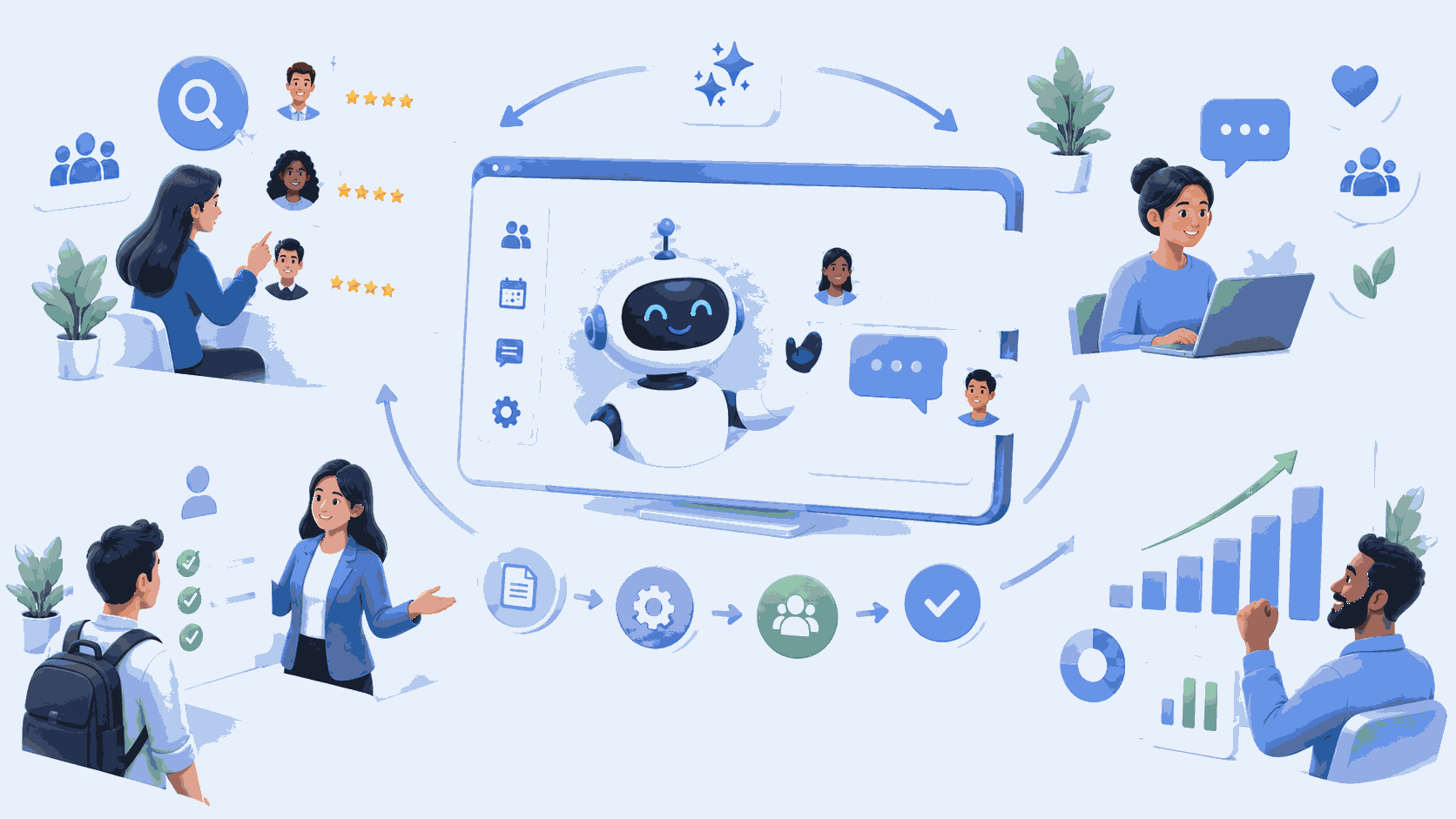
Preparing onboarding materials, sorting through resumes, and answering recurring questions about time off or payroll: HR teams spend a significant portion of their time on repetitive, low-value-added tasks that leave little room for supporting their teams. An AI agent can take over a large portion of this work, provided it is connected to your existing tools (HRIS, Active Directory, Microsoft 365) and configured for specific use cases.
This article details specific use cases for an AI agent in HR, the measurable benefits from our client deployments, and the method for defining a project scope without overstepping its boundaries.
Why HR Is a Natural Fit for an AI Agent
Three characteristics make HR processes particularly well-suited for automation using AI agents: a consistent volume of tasks (monthly hires, leave requests, administrative inquiries), procedures that are largely standardized across companies, and a significant amount of information retrieval from existing systems (HRIS, Active Directory, HR document database). This is exactly the kind of area where an AI agent can deliver rapid benefits without requiring a complete overhaul of existing tools.
This does not apply to all HR processes. Final hiring decisions, the assessment of soft skills, and conflict resolution remain human decisions. The AI agent handles the logistics and information gathering, not the judgment.
Real-World Use Cases for AI Agents in HR
Onboarding New Employees
This is the most mature HR use case among our clients. The AI agent connects to the HRIS, detects the expected start date, automatically creates accounts in Active Directory and Microsoft 365, provisions access based on role, sends personalized communications, and tracks the progress of each onboarding task.
Results measured across our deployments: the time spent per person on validation has decreased from 2 to 3 hours to 5 to 10 minutes; workstation availability has improved from D+1/D+3 to D0; and the error rate (missed access, unassigned licenses) has dropped from 15% to less than 1%.
Details about this use case are available in our dedicated information sheet: Employee Onboarding Agent.
Recruitment: Screening, Scheduling, Follow-ups
Recruitment combines the characteristics that make an AI agent relevant: high volume, repetitive tasks (sorting resumes, scheduling interviews, following up with candidates), and the need for natural language processing. An AI agent can screen applications by cross-referencing resumes with job descriptions and the history of shortlisted candidates, automatically schedule interviews in stakeholders’ calendars, and send personalized messages at every stage of the process.
What the agent does not do—and should not do—is assess soft skills, evaluate cultural fit, or make the final decision. These steps remain the responsibility of human beings. The goal is for the recruiter to spend their time on qualitative evaluation, not on logistics.
Frequently Asked HR Questions
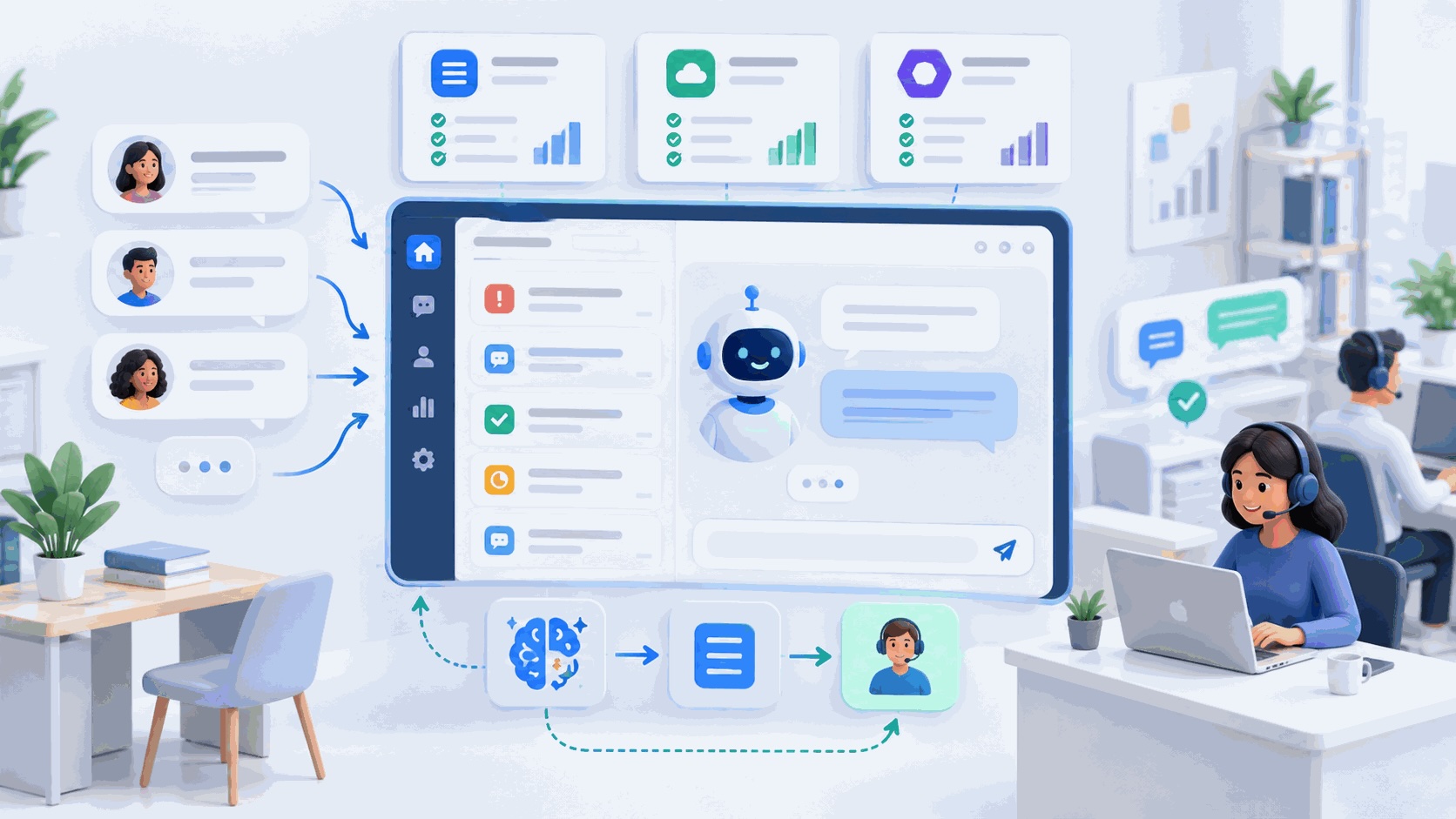
Vacation time, pay stubs, internal procedures, employee benefits: these are recurring questions that keep HR teams busy providing answers that are already documented somewhere in the internal documentation. An AI agent connected to your HR document database responds directly to employees in natural language, providing up-to-date information, and escalates only those cases that are not covered or are sensitive in nature to a human agent.
What Studies on Productivity Gains Show
The benchmark study on this topic remains the one by Brynjolfsson, Li, and Raymond, published by the NBER (Working Paper 31161), which measures an average productivity gain of 14% for AI-assisted tasks, with significant variations depending on the maturity of the deployment. Specifically regarding onboarding—where tasks are more standardized and easier to define—the gains measured among our clients are significantly higher than this average, as detailed above.
For a comprehensive overview of the benefits by use case and the calculation method, see our article “Productivity Gains from AI Agents: 2026 Industry Benchmarks.”
How IT Systèmes Deploys an AI Agent for HR
The method follows the same process as for other use cases involving AI agents in the workplace, with a specific focus on the quality of HRIS data upstream.
- Audit and Scoping (1 to 2 weeks): Identifying the most time-consuming HR process, mapping the systems to be integrated (HRIS, Active Directory, Microsoft 365, recruitment tools), and verifying the quality of existing data.
- Limited-scope PoC (2 to 4 weeks): A standard onboarding agent is typically deployed within this timeframe. We validate the actual benefits before expanding the scope.
- Gradual expansion: Once the first use case has been validated, expand to recruitment or recurring HR issues, systematically measuring the benefits at each stage.
For details on costs based on project complexity, see "How Much Does an AI Agent Cost for a Business?" and, for the method used to calculate return on investment, see " What ROI Can You Expect from an AI Agent Project?"
Frequently asked questions
Can an AI agent replace a recruiter?
No. An AI agent handles the initial screening, scheduling, and follow-ups, but assessing behavioral skills and making the final decision remain human tasks. The goal is to free up time for these high-value tasks, not to automate them.
What data is needed before deploying an HR AI agent?
An up-to-date HRIS, a structured HR knowledge base (leave policies, procedures, internal FAQs), and API access or native connectors to Active Directory and Microsoft 365. If this data is outdated or incomplete, it must be cleaned up before any deployment.
How long does it take to deploy an AI agent for onboarding?
A standard onboarding agent can be deployed in 2 to 4 weeks—including the audit—within a pilot scope. Expansion to other HR processes then proceeds at a faster pace once integration with the HRIS and Active Directory systems is in place.
Learn more
Want to determine whether an HR AI agent is right for your organization? Discover our custom AI agents for businesses, or contact our experts for a free audit of your processes.




.svg)