.svg)
.png)
Short answer. An agent-based infrastructure operator is the service provider that designs, secures, and continuously operates the infrastructure on which a company’s AI agents operate: access to data and applications, agent identities and permissions, orchestration, monitoring, traceability, cost control, and compliance. It does not sell an AI model or software. It is responsible for the behavior of agents in production: they do what is expected of them, within the permissions granted to them, and every action they take can be accounted for.
Definition: Agent-based and operator-based infrastructure
An agentic infrastructure is the set of components that enable AI agents to act within a company’s information system in a controlled manner. The terms “agent-based AI infrastructure” or, in English, “agentic infrastructure” are also used.
The term refers to a layer, not a product. It sits between AI models (GPT, Claude, Mistral) and business applications (ERP, CRM, email, ticketing systems). It determines what an agent can access, what actions it is authorized to take, how it is monitored, and how a human can take over. For the basics of agent-based AI itself, see our article “Agent-Based AI: Definition, How It Works, and Business Applications.”
The operator is the person who keeps this layer running on a day-to-day basis. The term says it all: like a network or hosting operator, they are committed to a service in production, not to a completed project.
Why an AI agent needs a dedicated infrastructure
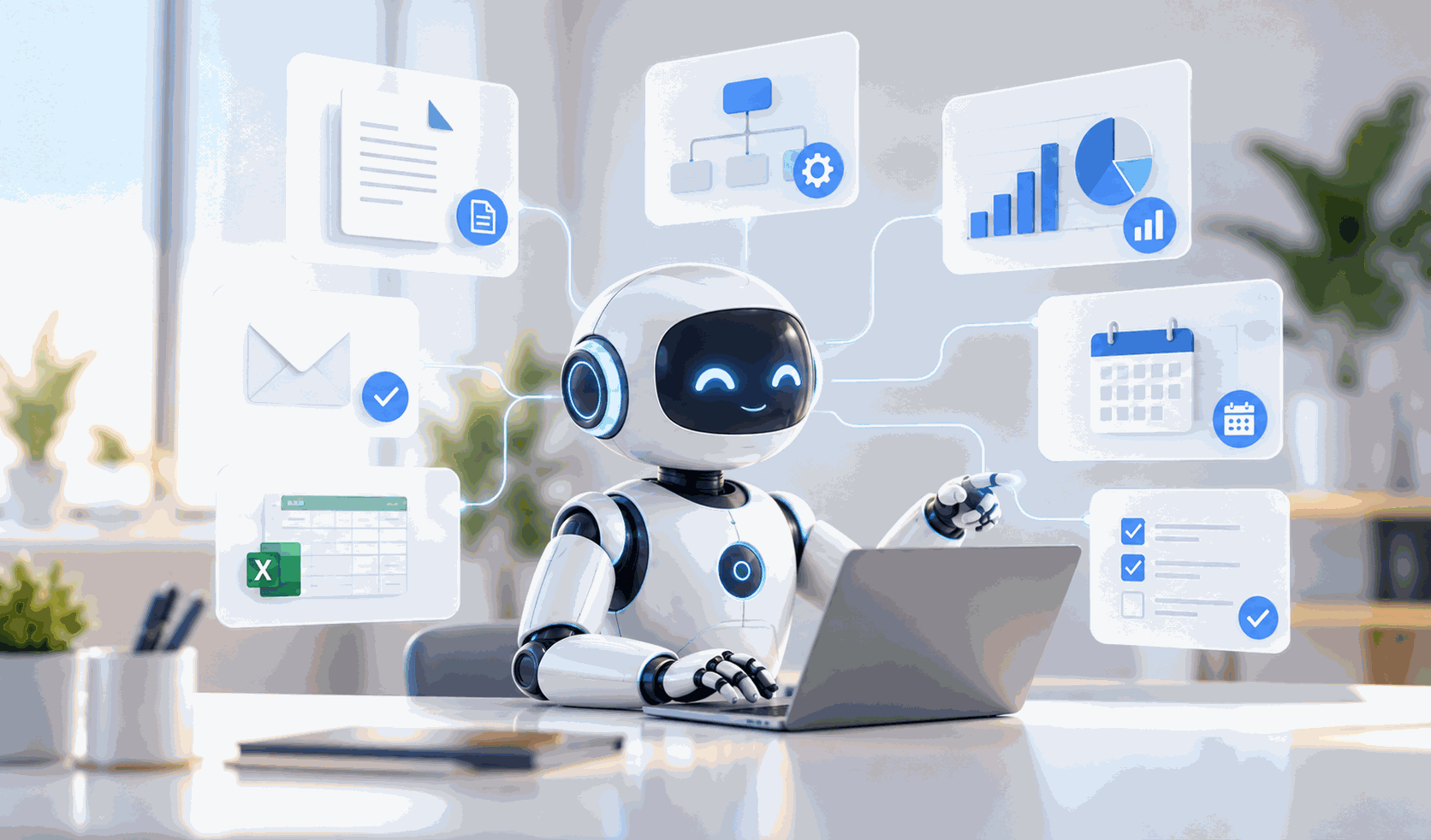
A chatbot generates a response, and then a human decides what to do with it. An AI agent goes a step further: it reads data, selects an action, and executes it within the company’s software. It creates a user account, updates a customer record, or closes a ticket.
As soon as an agent takes action, five questions arise, and none of them depends on the AI model:
- What data can the agent access?
- What actions can it perform, and what permissions does it require?
- Who is alerted when it makes a mistake, and how does a human take over?
- How much does each task he handles cost?
- Three months later, can we still figure out why he made that decision?
These issues fall under the purview of IT operations and security. That is why the challenge of an agent project lies less in the choice of model than in its integration into the information system.
The Eight Components of an Agent-Based Infrastructure
| Component | What it covers | Review Question |
|---|---|---|
| Connectors | The agent's access to applications and data, via APIs or MCP (Model Context Protocol) servers | Does the agent access only the sources that are relevant to his or her task? |
| Identities and Rights | A separate account for each employee, with only the minimum necessary permissions | Is it possible to terminate an employee without affecting payroll? |
| Orchestration | The workflow between agents, tools, and humans | At what point does the agent hand things over to a human? |
| Supervision | Availability, Errors, Escalations | Who is notified, and within what timeframe? |
| Traceability | The log of the agent's actions and decisions | Can an action be reconstructed after the fact? |
| Cost Control | Resource consumption by model, task, and agent | Do we know the cost of a completed task? |
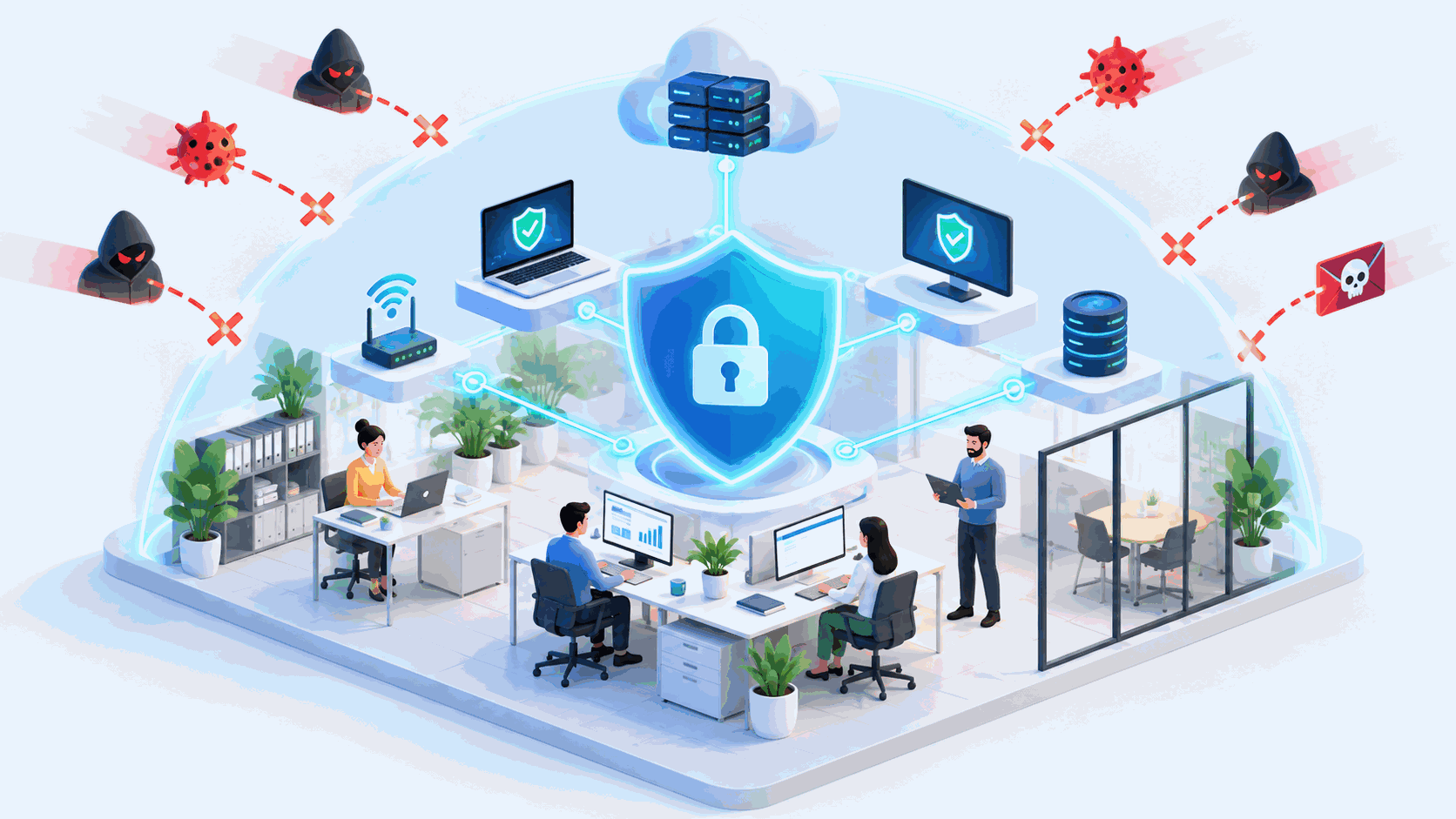
| Security | Detection of abnormal usage and protection against the injection of malicious commands | Are the agents' actions reported back to the Security Operations Center (SOC)? |
| Compliance | GDPR, AI Act, industry-specific requirements | Is the treatment listed in the registry? Do users know they are interacting with an AI? |
Example: An agent who processes access requests in Microsoft 365
Let's consider an agent responsible for handling requests for access to Microsoft 365 shared spaces. An employee writes: "I need access to the Sales department's Clients folder." The agent reviews the request, identifies the relevant group, and adds the person to it.
Here's what the operator sets up around him:
- Identity. Agents have their own identities in the company directory. Microsoft offers Microsoft Entra Agent ID for this purpose, which enables conditional access rules, centralized logging, and lifecycle management for agents. Copilot Studio agents created before this feature was enabled must be recreated; there is no automatic conversion.
- Permissions. The agent can view the directory and add members to a closed list of groups. The agent cannot create groups or modify administrative permissions.
- Human review. A request involving a sensitive group (finance, human resources, management) is sent to the group manager for approval.
- Traceability. Each addition is logged along with the original request and the reason provided by the agent.
- Security. An unusual number of additions, or a request outside of normal business hours, triggers an alert at the SOC.
- Cost. The operator tracks the average cost of processing a request to compare it with the time required for manual processing.
None of this depends on the AI model used. It is the operational work that enables an agent to act without becoming a risk.
Publisher, integrator, operator: three different professions
| Publisher | Integrator | Agent-Based Infrastructure Operator | |
|---|---|---|---|
| What it provides | A platform or a model | A Deployment Project | A service in production |
| Time Frame for the Commitment | The License | The Project Plan | The term of the contract |
| What it guarantees | How the product works | Compliance with the specifications | The Behavior of Employees in Their Day-to-Day Work |
| After going live | Product Support | Warranty or Maintenance | Monitoring, Correction, Development, Security |
A single service provider can perform several of these roles. So the right question isn’t “Who builds the agent?” but “Who is responsible for it on Monday morning?”
What an operator does on a daily basis
Before going live, the operator maps out the access rights the agent needs, creates the agent's identities, sets the thresholds beyond which a human takes over, and records the processing in the GDPR register.
In production, it tracks processed tasks and errors, coordinates manual intervention when an agent goes beyond its scope, monitors costs, and reports security incidents.
Over time, it adjusts entitlements, adapts connectors when an application changes, manages changes to the underlying model, and generates detailed reports, along with their calculation methods.
How to Choose a Service Provider: Eight Questions to Ask
- Does each agent have a distinct identity and set of rights that can be revoked without affecting human accounts?
- How does a human take over: who, at what times, and within what timeframe?
- Are agents' actions logged and accessible to the customer?
- Are incidents involving staff members monitored by a security team?
- Is the cost per task tracked and reported?
- Where is the data stored, and what does the customer receive at the end of the contract?
- Does the operator already have agents in production, and does it publish measured results along with the methodology used?
- Is he familiar with the existing IT systems (Microsoft 365, directory, ERP), or is he starting from scratch?
Our status at IT Systèmes: an agent already in production
IT Systèmes is an IT services company founded in 2010, with 44 employees in Paris (Malakoff), Lyon, Annecy, and Bordeaux. We manage the information systems of more than 50 clients through IT outsourcing. Our approach to agent-based infrastructure stems from our experience as system operators: an AI agent in production monitors, secures, and corrects itself just like the rest of the information system.
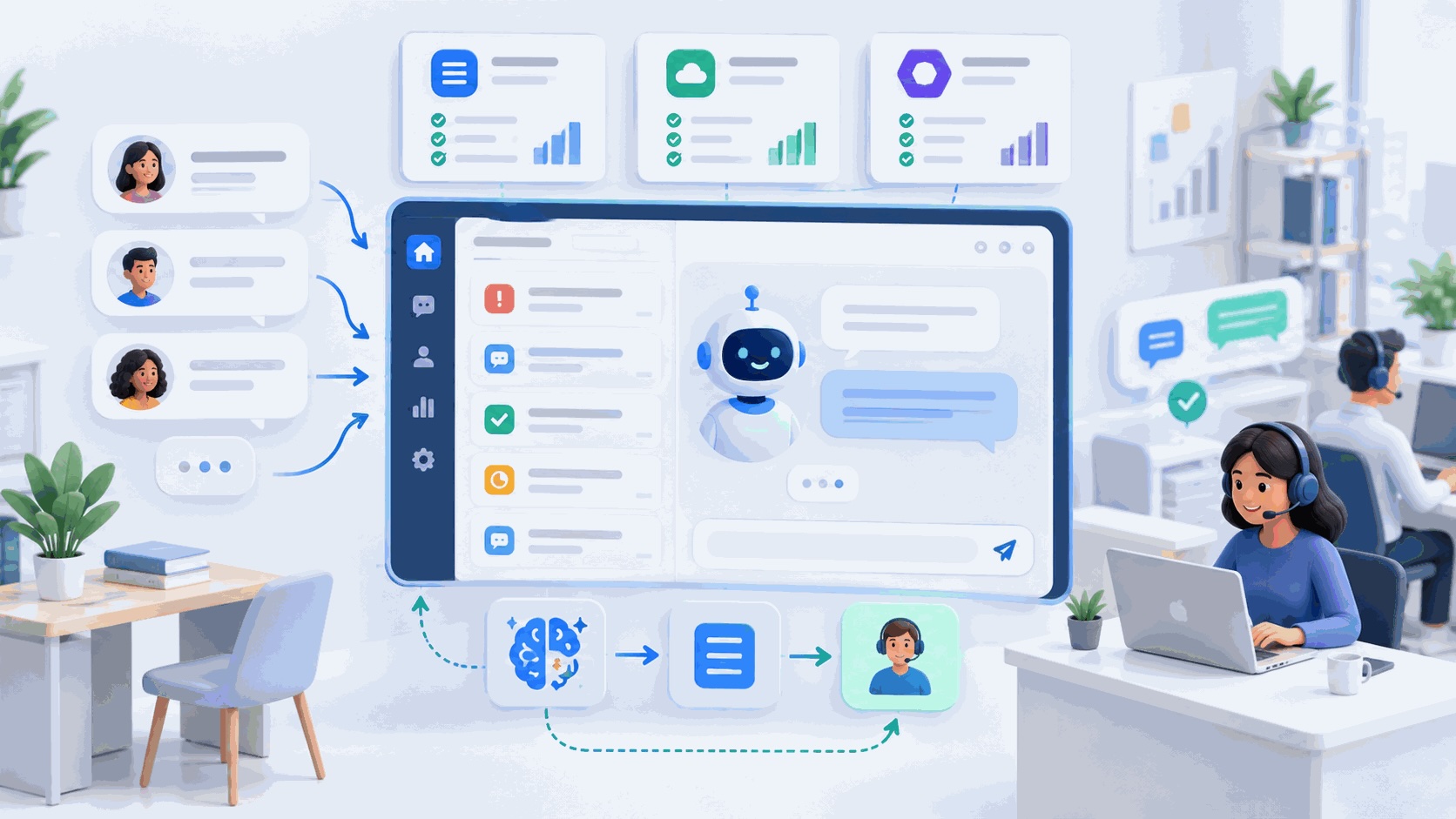
We are already using our own agent. The Hypergérance offering includes Helpy, an AI agent that handles Level 1 support. From June to August 2026, among the 55 customers on Hypergérance contracts, Helpy received 1,889 tickets: 680 in June, 720 in July, and 489 in August, including the summer lull. 60% were closed without human intervention, in an average of 3 minutes. Any ticket taken over by a technician—even if only partially handled by the agent—is excluded from this rate. Source: Helpy monitoring tool.
What we do for Helpy (continuous monitoring, human intervention, and published metrics along with their methodology) is exactly what an agent-based infrastructure operator must do for a company’s agents. Two of our activities follow this approach:
- Building: We develop agents and the software that hosts them using the hyperdevelopment method, in which AI agents reduce code production time by a factor of 10.
- Deployment: We run our own agent in production on our customers' infrastructure (Hypergérance offering, using the Helpy agent).
Our Microsoft expertise (33 active Microsoft certifications as of September 4, 2026) is key here: for many small and medium-sized businesses, employees rely on Microsoft 365 and its directory, which is where their identities and access rights are managed.
Frequently asked questions
What is an agent-based infrastructure?
It refers to the set of components that enable AI agents to operate within a company’s information system in a controlled manner: connectors, identities and permissions, orchestration, monitoring, traceability, cost control, security, and compliance.
What is the difference between an AI provider and an AI integrator?
The integrator delivers a project and guarantees its compliance with the specifications. The operator guarantees the operation of the agents in production throughout the duration of the contract.
Can an IT services company serve as an agent-based infrastructure operator?
Yes, if it has the expertise: continuous operation, monitoring, security, and human intervention. That’s what sets an AI digital services company that operates production agents apart from one that merely integrates AI tools.
Does an SME need an agent-based infrastructure operator?
Not for an assistant who simply answers questions. Yes, as soon as an agent interacts with the information system—whether by entering data into software, modifying permissions, sending messages, or closing requests—it becomes necessary to manage that person’s access, monitor their activity, and be able to take control if needed.
How can you secure an AI agent infrastructure?
The ANSSI guide “Security Recommendations for a Generative AI System” does not specifically address agents, but several of its recommendations apply directly to them: controlling the AI system’s interactions with business applications, limiting automated actions when the AI processes uncontrolled inputs, and logging processing activities. We add to this a dedicated identity for each agent with minimal privileges, log monitoring by a security team, and a regular review of privileges. We detail these practices in our article “How to Secure an AI Agent Project in a Business Setting.”
How much does it cost to implement an AI agent?
At IT Systèmes, an AI agent starts at €5,000 for a single-task agent and goes up to €30,000 for a multi-agent solution.
Does the AI Act apply to AI agents?
The European AI Regulation (Regulation (EU) 2024/1689) classifies systems according to their risk level. Many internal systems, such as support services or document processing, fall under the minimal-risk category. As soon as a system interacts directly with people, the transparency requirements of Article 50 have applied since August 2, 2026: the user must be aware that they are interacting with an AI. For high-risk uses listed in Annex III, such as recruitment or creditworthiness assessment, the obligations have been postponed to December 2, 2027, by Regulation (EU) 2026/1744, known as the Digital Omnibus AI Regulation. Finally, the requirement to train staff who use AI has been in effect since February 2, 2025.
Sources: Regulation (EU) 2024/1689 on Artificial Intelligence and Regulation (EU) 2026/1744, EUR-Lex; ANSSI, Security Recommendations for a Generative AI System; Microsoft Learn, Microsoft Entra Agent ID documentation; Helpy Barometer, June–August 2026, Helpy monitoring tool.




.svg)